Our top pickMost reviewed
25 min25-Minute Alpine Landing
★ 4.8 · 693 reviews
- 25 minutes, above Franz Josef Glacier
- Ice pinnacles and crevasses
- Most booked
- Free cancellation
$219$525.60 / hour
Check availability→ The ten minutes that matter
Every flight sold out of this village says it includes a landing. They do not all mean the same thing by it. Some shut the machine down on the glacier itself, some on the névé at the head of it, and some on an alpine snowfield beside it with the ice in view rather than under your boots. This page says which is which, what the ten minutes on the ground are actually like, and what a Franz Josef glacier helicopter landing depends on before it happens at all.
Quick answer
The short answer. Look for the words “alpine landing” or “glacier landing” rather than simply “snow landing”. The twenty-five minute flight at $219 is the cheapest ticket that reliably puts the skids on the ice. All the flights on this page land somewhere; not all of them land on the glacier.
The three kinds
Read the listing for the phrase, then read the reviews for what people actually got.
Operators use these three phrases loosely, and the listings do not always help. In practice:
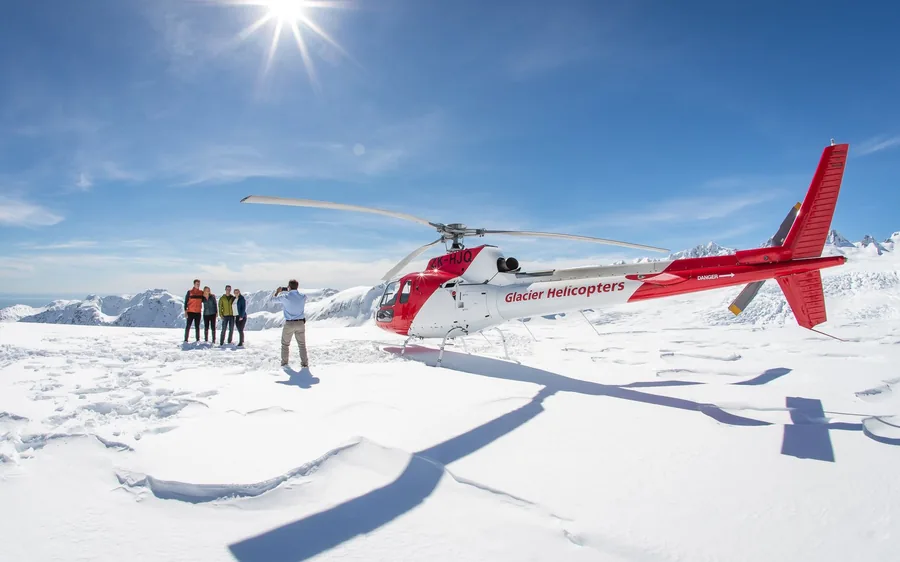
Snow landing. The machine sets down on a snowfield at altitude, which may be on the glacier’s upper basin or on a neighbouring one. You are standing on snow with the icefall in view. This is the most common phrase and the least specific.
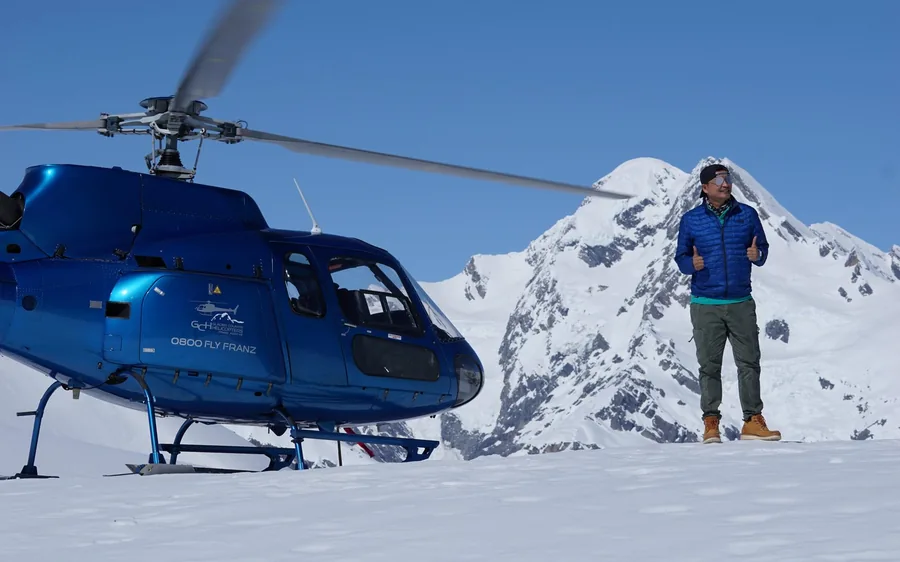
Alpine landing. A landing site chosen in the high alpine terrain around the glacier head. In practice this is the phrase used by the twenty-five minute flight that dominates the reviews here, and it means a proper shutdown with time out of the machine.
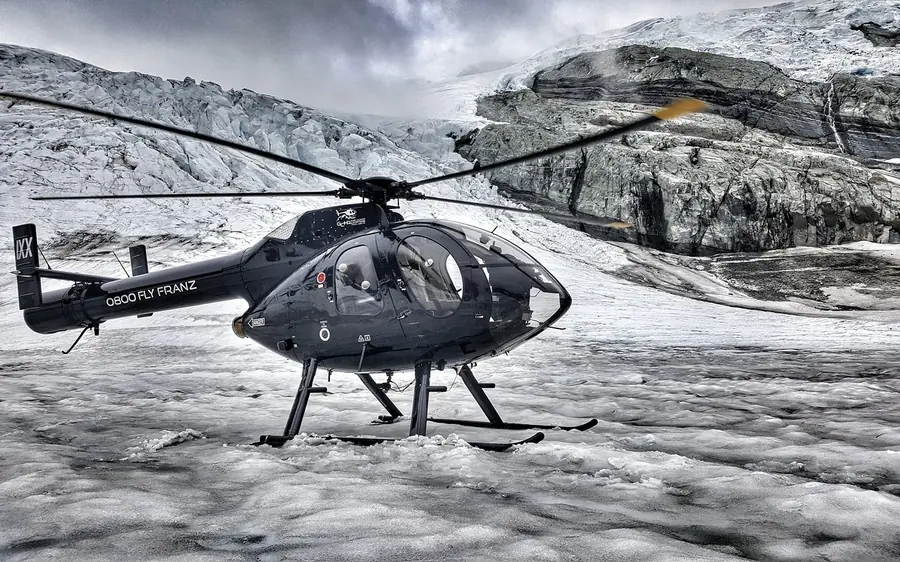
Glacier landing. On the glacier itself, usually on the névé — the snowfield that feeds the ice — rather than on the crevassed section lower down. Nobody lands a helicopter on bare blue ice; the surface has to be flat, firm and free of hidden holes.
The honest summary is that from inside the machine the three look more similar than the words suggest. What genuinely differs is altitude, how long the rotors stay stopped, and whether the glacier is under you or beside you.
What the ten minutes are like
The landing itself is unremarkable and quick. The pilot circles the site once, sets down, runs the turbine down, and the noise stops. That is the moment people describe afterwards: not the flight, the silence.
You step out onto packed snow. It is around freezing regardless of the month, there is usually a light wind coming down off the ice, and the light is brutal — snow above two thousand metres on a clear day will hurt your eyes without sunglasses.
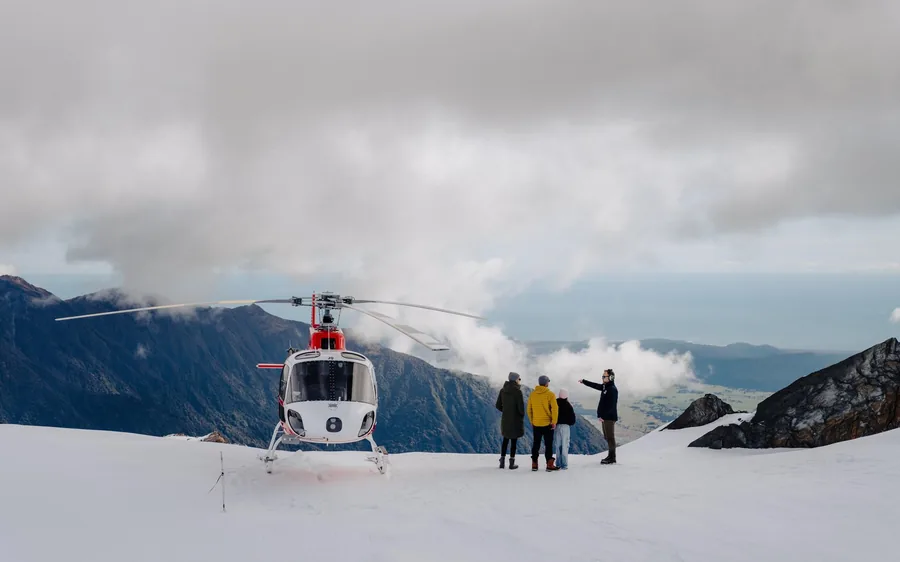
You are asked to stay within a marked area near the machine. This is not fussiness: the névé has crevasses under the snow bridges and the pilot knows where the safe ground ends. Ten metres is plenty for the photograph anyway, because the subject is the valley behind you, not the ground.
Then the turbine winds up, the noise comes back, and you are down in the village nine minutes later.
Before you book
The landing is the part of the flight that is most often cut, and the part people most want.
A pilot can fly a scenic circuit in conditions that will not allow a landing. If the site is in cloud or the snow is unstable, some operators will offer the flight without the landing at a reduced price. Decide in advance whether you want that flight.
There is no fixed landing pad. The site is chosen on the day from a handful of known areas, based on where the snow has settled. In late summer, after a warm run, the choice narrows.
This is a scenic flight, not a heli-hike. You stay on packed snow within a few metres of the machine. Ordinary shoes are fine; ordinary shoes plus wet socks afterwards are also common, so bring something with a closed top.
The published figure is time on the ground, and it flexes with the schedule behind you. On a busy clear morning it is closer to the lower end; on a quiet afternoon a pilot with nothing behind them will happily let you stand there longer.
The hour-long flights land twice, in two different places, and that is genuinely worth it for the change of scene. But the second landing is a variation on the first, not an escalation.
Book direct
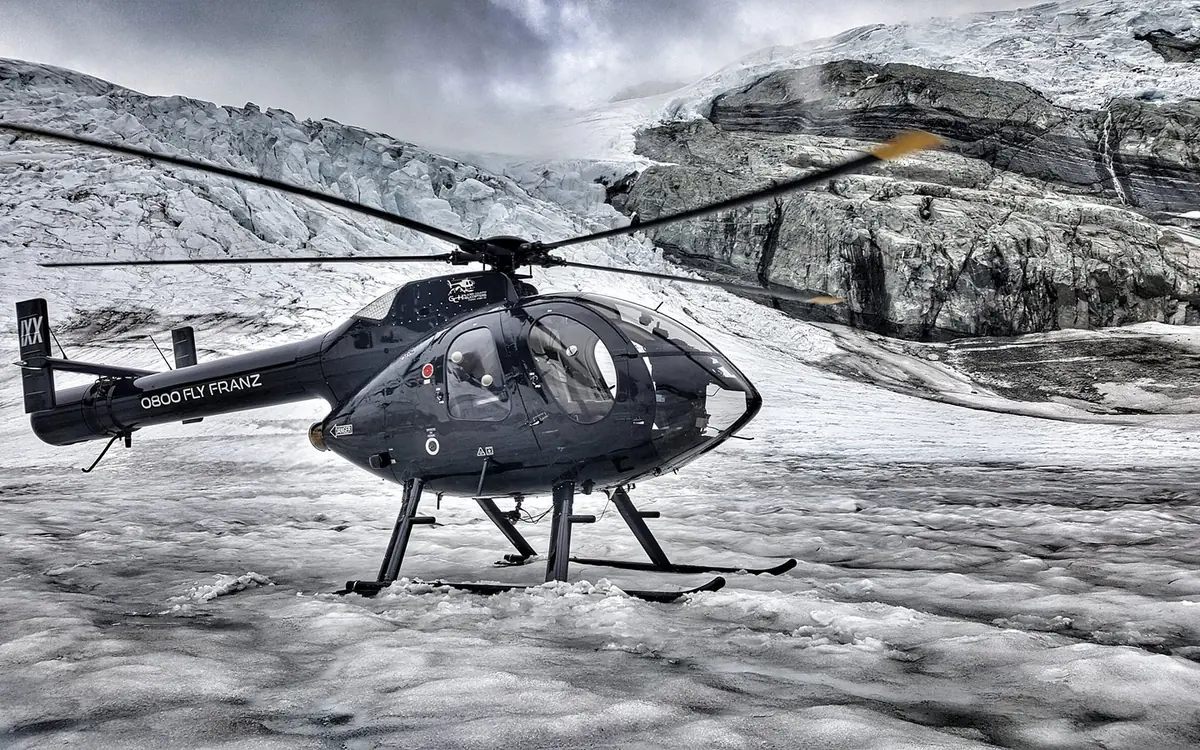
Ice, snow beside the ice, snow above Fox, and the one that lands twice.
★ 4.8 · 693 reviews
★ 4.9 · 56 reviews
★ 4.7 · 402 reviews
★ 4.8 · 30 reviews
Want the whole minute-by-minute picture of the flight, not just the landing?
What you actually see→Common questions
Every flight compared on this site includes at least one landing. What varies is where: on the glacier itself, on the névé at its head, or on an alpine snowfield beside it. Look for “alpine landing” or “glacier landing” in the listing rather than the vaguer “snow landing”.
Five to fifteen minutes, ten being typical. It depends on the flight length and on how many machines are waiting for the site. The rotors are shut down for it, which is what makes the ten minutes feel much longer than they are.
Only within a marked area a few metres from the machine. The névé has crevasses under snow bridges and only the pilot knows where the safe ground ends. Walking on the glacier properly is a heli-hike, which is a different product with crampons and a guide.
Some operators will fly the scenic circuit without the landing, sometimes at a reduced price, and some will cancel outright and refund you. Ask which policy applies before you book if the landing is the reason you are flying.
No, but bring a warm layer and closed shoes. It is around freezing at the landing site all year and there is usually a katabatic breeze off the ice. Sunglasses matter more than most people expect — the glare off fresh snow at altitude is severe.
The twenty-five minute alpine landing flight at $219. The twenty-minute flight at $213 also lands, but on a snowfield rather than on the glacier itself.
Go deeper
Twelve helicopter flights out of one village, from twenty minutes to ninety.
PricesTwelve flights priced per person and per minute, and where the money actually goes.
VerdictTwelve flights ranked for one decision, with a straight answer at the end.
LengthThe only real variable, and how much country each length buys you.
Which oneTwo glaciers, twenty-five minutes apart, and the flights that show you both.
WeatherHow often flights are stood down here, and how to build a trip around it.